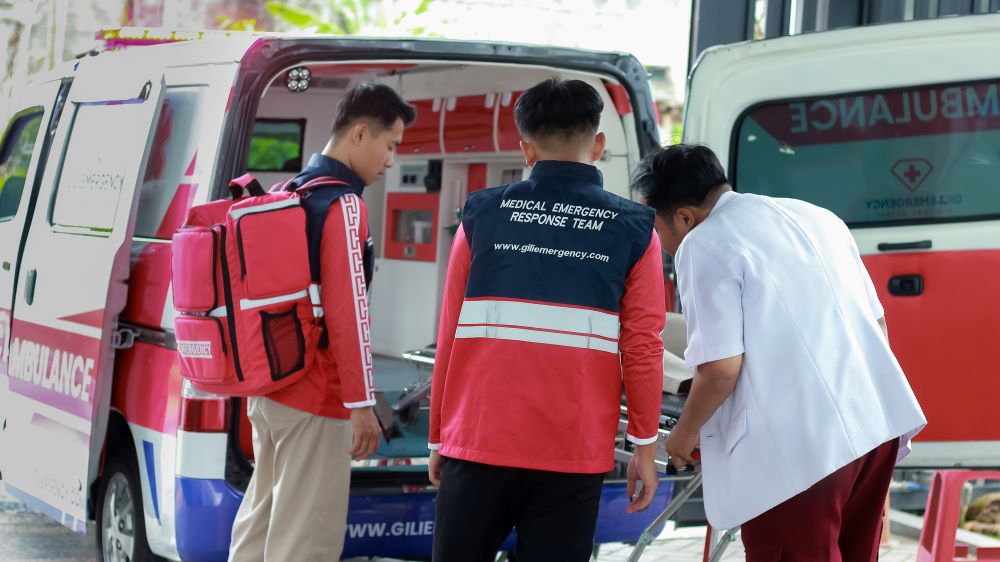
Ever found yourself daydreaming about the soft sand of Gili Islands—only to suddenly wonder, “Wait… what happens if someone needs urgent medical help out there?”
Yep, you’re not alone. And that’s exactly why understanding ambulance Gili services is way more important than most travelers (and even locals) realize.
In this guide, we’ll have a casual chat—like friends sipping coconut water by the beach—while discussing how emergency services on Gili actually work. Because once you know, you’ll feel much safer exploring every coral reef, beach bar, and sunset point.
What Makes Ambulance Gili So Unique?
If you’ve ever visited the Gilis—Gili Trawangan, Gili Air, or Gili Meno—you already know the vibe:
No cars. No motorbikes. No engine noise. Just bicycles, horses, waves, and that addictive island calm.
But that also means ambulance Gili isn’t like your typical siren-blaring van. Here, emergency transport can involve:
-
Cidomo-style medical carts
-
Modified electric ambulance buggies
-
Boat transfers to Lombok
-
Coordinated medical evacuation depending on severity
It’s a hybrid system—part island ingenuity, part professional medical coordination.
Honestly, the first time I saw a medical cart maneuvering through the narrow sandy paths, I thought, “This is so Gili… but somehow it works.”
How Fast Can an Ambulance Reach You on Gili Islands?
Good question. And the answer is: surprisingly fast, considering the no-motor rule.
Here’s how it usually flows:
-
On Gili Trawangan, the island with the most medical facilities, emergency teams respond within minutes.
-
On Gili Air and Gili Meno, it may take slightly longer, but the pathways are shorter and easier to navigate.
-
For critical cases, boat ambulances are prepped quickly to transfer patients to Lombok’s hospitals.
Imagine you’re on the beach, the sun still warm on your skin, and suddenly a nearby tourist faints from heat exhaustion. You’d see the responders arriving on an electric buggy—smooth, quiet, and efficient. It looks different than city ambulances, but the intention is the same: get you to safety fast.
What Medical Facilities Support Ambulance Gili Services?
Each island has different levels of care, so knowing the basics can help you feel much more prepared.
Gili Trawangan
Has the most developed options—clinics, pharmacies, and trained emergency responders. It’s the main hub for ambulance Gili operations.
Gili Air
Smaller clinics, but still reliable for first aid, minor treatments, dehydration, allergic reactions, and stabilizing patients before transfer.
Gili Meno
Peaceful, quiet, but limited in medical care. Emergency transport typically moves quickly to Gili T or straight to Lombok.
Many visitors don’t realize that ambulance teams here are used to handling:
-
Diving-related injuries
-
Jellyfish stings
-
Heat exhaustion
-
Bike accidents
-
Food-related issues
-
Dehydration (super common!)
And yes, they handle it smoothly—even with the simplicity of island infrastructure.
The Reality of Emergency Boat Transfers
Here’s where things get really interesting. Because on the Gilis, the sea isn’t just a view—it’s part of the emergency pathway.
When needed, ambulance Gili teams coordinate:
-
A speedboat or emergency boat
-
Medical staff to accompany you
-
Direct transport to Bangsal or Teluk Nare in Lombok
-
Continued ambulance service on land to reach a hospital
If you’re imagining yourself being whisked across the water at sunset with the wind brushing your face—yep, that’s pretty much how it feels, though hopefully not under stressful circumstances.
This is one of those behind-the-scenes mechanisms that makes the islands safe for tourists from around the world.
How Much Does an Ambulance Gili Cost?
Prices vary depending on the service:
-
Basic on-island transport
-
Emergency medical assistance
-
Boat evacuation
-
Land ambulance in Lombok
But here’s a smart tip I always tell friends:
Travel insurance isn’t optional when visiting the Gilis.
Even a small accident can lead to boat transfers and hospital visits that quickly become pricey.
Imagine you twist your ankle during a sunset bike ride—harmless at first, but then you can’t walk. The ambulance cart comes, helps you to the nearest clinic, and suddenly you realize how grateful you are that someone thought to create this entire ecosystem of care.
Who Should Really Pay Attention to Gili Ambulance Services?
You might be thinking, “I’m a careful traveler. I’ll be fine.”
And maybe you will!
Still, the people who most often need emergency help in the Gilis include:
-
Divers (ear issues, decompression problems)
-
Cyclists on sandy paths
-
People with asthma or allergies
-
Tourists who underestimate the heat
-
Families traveling with kids
-
Elderly travelers
Even if you’re not in any of these groups, knowing how ambulance Gili works gives you peace of mind—that soft, comforting feeling that lets you enjoy the islands more deeply.
My Personal Experience: The Day I Witnessed Gili Emergency Teams in Action
A few months ago, I was on Gili Air, grabbing a coconut after snorkeling. Suddenly, a guy next to me—sunburned from head to toe—started feeling dizzy.
Within minutes, a small medical cart rolled in. The responders spoke calmly, checked his vitals, hydrated him, and moved him smoothly to a nearby clinic. No chaos. No confusion.
I remember thinking, “Wow. Even on a tiny island, they’ve got this under control.”
That’s when I realized how underrated ambulance Gili services actually are.
Why Understanding Ambulance Gili Matters for Your Safety
Look, accidents and health issues don’t care if you’re on vacation. They show up uninvited.
But here’s the comforting truth:
The Gili Islands aren’t just beautiful—they’re prepared.
When you understand how medical response works here, you feel:
-
Safer
-
More confident
-
More relaxed
-
More free to explore
And isn’t that what travel is supposed to feel like?
If you’re planning a trip—whether for diving, honeymooning, backpacking, or soul-searching—just knowing that ambulance Gili services exist and function well gives you that gentle reassurance that you’ll be okay.
Because safety should be the silent partner of every adventure.
Why You Should Always Know About Ambulance Gili Before Your Trip
Before setting foot on the islands, take a moment to learn how ambulance Gili works. It’s one of those things you hope you’ll never need—but you’ll be incredibly grateful for if you do.
Stay hydrated, ride your bike carefully, respect the sun, and enjoy every corner of the Gilis with peace of mind… knowing that help is never far away.